
Why Every Driver Needs an In-Car Dash Camera in 2026
Jul 07, 2026
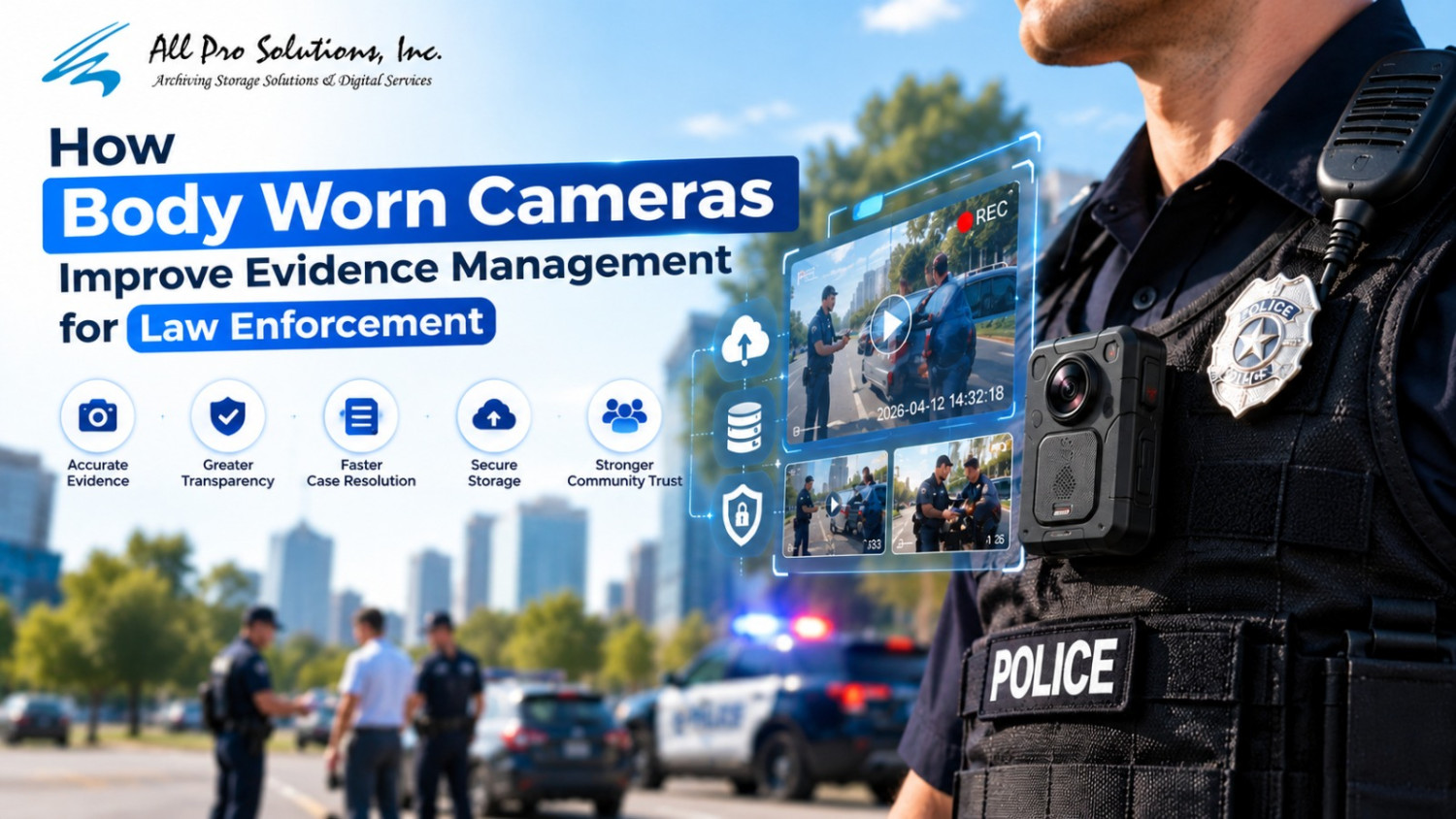
Body-worn cameras improve evidence management for law enforcement by capturing video and audio of field activities, helping agencies organize digital evidence, and making relevant footage available to authorized personnel for review and investigation. With features such as HD recording, GPS tracking, night vision, and secure evidence handling, they provide police officers and investigators with a practical way to document incidents and manage video evidence more effectively.
Law enforcement agencies deal with a constant flow of information from routine traffic stops and arrests to investigations, field operations, and public safety incidents. In many of these situations, having an accurate record of what happened can be extremely valuable. This is where modern body-worn cameras play an important role.
A body-worn camera does more than record video. When combined with an organized digital evidence workflow, it can help law enforcement teams capture, organize, secure, and review footage more efficiently. Officers can document interactions hands-free, while investigators and authorized personnel can access relevant recordings for incident review and case documentation.
Modern Law Enforcement Body worn Camera systems can include HD video and audio recording, GPS tracking, night vision, long battery life, and secure evidence handling. These capabilities make body-worn video a practical tool for agencies that need reliable documentation of field activities
But how exactly does body-worn video improve evidence management?
The answer begins with better evidence capture and continues through organization, authorized access, investigation, and review.
What Is a Law Enforcement Body-Worn Camera?
A law enforcement body-worn camera is a wearable recording device designed to help officers document incidents and interactions while performing their duties.
Unlike traditional recording equipment, a wearable camera allows an officer to record while keeping their hands available for other responsibilities. The compact design supports hands-free evidence capture during field operations.
According to All Pro Solutions, its law enforcement body camera system is designed to capture video and audio during field activities while supporting evidence workflows for agencies. The system can also incorporate features such as HD recording, GPS tracking, night vision, and extended battery life.
For police departments, this means important events can be documented directly from the officer's perspective rather than relying entirely on written reports or separate records.
How Do Body-Worn Cameras Improve Evidence Management?
The value of a Body Camera for Evidence Management goes beyond simply creating a video file.
Evidence management involves making recorded information easier to organize, locate, review, and protect. Body-worn video can contribute to this process by creating recorded evidence that can be incorporated into a structured digital workflow.
Here are some of the key ways body-worn cameras can improve evidence management.
1. They Create a Direct Record of Field Activities
Written reports provide important information, but video and audio can add another layer of context.
A body-worn camera can record interactions and incidents as they happen. This can help document routine encounters, traffic stops, arrests, investigations, and other field activities.
High-definition video can provide visual information, while audio recording can preserve conversations and other sounds associated with an incident. Together, these recordings can give authorized personnel additional information when reviewing an event.
For investigators, having access to recorded footage can make it easier to understand the circumstances surrounding an incident.
2. Video Evidence Can Support Investigations
Investigators often need to reconstruct what happened during an incident.
Video Evidence for Law Enforcement Investigations can provide recorded footage that supports incident review and case documentation. Instead of relying solely on written descriptions, authorized personnel can review relevant recordings as part of their investigation.
For example, body-worn video may help investigators review:
*Officer interactions
*Traffic stops
*Arrest-related incidents
*Field operations
*Recorded conversations
*The sequence of events during an incident
The footage does not replace investigative work, but it can provide another source of information for investigators and authorized personnel.
3. Organized Footage Makes Evidence Easier to Find
Recording footage is only the first step.
When an agency produces large amounts of digital video, finding the right recording can become an important operational task. A body camera system with evidence management capabilities can help agencies organize recorded footage so relevant files can be accessed when needed.
This is particularly useful when agencies are handling recordings from many officers and different types of field activities.
A structured approach can help teams move from:
Capture → Organize → Access → Review → Case Documentation
Rather than treating every recording as an isolated video file, agencies can incorporate footage into their broader digital evidence workflow.
Body-Worn Video for Police Officers & Law Enforcement Agencies
Body-Worn Video for Police Officers & Law Enforcement Agencies can serve different purposes across an agency.
For Police Officers
For officers, the main advantage is hands-free recording.
A wearable camera allows an officer to document an interaction without having to operate a separate handheld recording device. This lets the officer remain focused on the surrounding environment and their responsibilities.
Features such as long battery life can also support extended field operations and full-shift recording requirements.
For Investigators
Investigators can use recorded footage as an additional source of information during incident review and case documentation.
Instead of depending entirely on written accounts, investigators can review relevant recordings to better understand what occurred during a field encounter.
For Evidence Management Teams
Evidence management teams need organized and controlled access to digital records.
A body-worn camera solution can contribute to this process by organizing recorded footage and supporting authorized review. This makes the camera part of a larger digital evidence workflow rather than simply a standalone recording device.
GPS Adds Important Location Context
Location can be an important part of incident documentation.
A body-worn camera equipped with GPS can associate recorded footage with location information. This provides additional context when reviewing an incident.
For example, when investigators examine recorded footage from a field operation, location information can help establish where the recording was captured.
The All Pro Solutions system identifies GPS tracking as one of its features and describes it as a way to associate footage with location information.
This can be particularly useful when reviewing events that take place across different locations.
Night Vision Supports Low-Light Recording
Law enforcement operations do not always happen during daylight hours.
A body camera with night vision can support video recording in low-light conditions. This can help officers document field activities when normal lighting is limited.
For agencies, this capability can make body-worn video more useful across a wider range of operational environments.
The combination of video, audio, and low-light recording capabilities can provide a more complete record of an incident than a system limited to standard daytime recording.
Secure Handling of Digital Evidence Matters
Capturing evidence is only part of the process. Agencies also need to consider how recorded information is protected and who can access it.
The All Pro Solutions body camera system describes encrypted video records and authorized access as part of its evidence workflow. The page identifies 100% encryption and describes recorded information as being organized for authorized personnel use.
This approach is important because law enforcement video can contain sensitive information involving officers, suspects, witnesses, victims, and members of the public.
A secure evidence workflow can help agencies maintain better control over recorded information and reduce unnecessary access.
Why Audio Recording Is Important
Video can show what happened, but audio can provide additional context.
A body-worn camera that records both video and audio can document interactions more comprehensively. Conversations, verbal instructions, questions, responses, and other sounds may provide useful context when authorized personnel review an incident.
For this reason, audio recording is an important component of modern Body-Worn Video for Law Enforcement Agencies.
The All Pro Solutions system specifically includes audio recording alongside HD video recording as part of its evidence-capture capabilities.
Long Battery Life Supports Full-Shift Operations
A body camera is most useful when it can support the demands of field work.
Long battery life can be particularly important for officers who spend extended periods away from a charging station. According to the provided All Pro Solutions page, the system is designed to support extended field operations and full-shift recording needs.
This can help reduce concerns around frequent charging during active operations and make body-worn video more practical for day-to-day deployment.
From Recording to Evidence Management
One of the most important points for agencies is that recording alone does not create an effective evidence management strategy.
A department may have thousands of video files, but those files become far more useful when they can be organized and accessed appropriately.
Body camera evidence management process can be considered from multiple aspects:
First Step: Recording
Recording is done by the officer while he or she is performing activities in the field.
Second Step: Contextualization
For example, GPS can provide location information linked to the recording.
Third Step: Organization
The recorded material can be integrated into the digital evidence management process.
Fourth Step: Access Control
Material can be managed for access by authorized persons.
Fifth Step: Investigation
The investigator can find the relevant material and analyze it.
This process shows why Body Camera for Evidence Management needs to be taken into consideration as a solution for evidence management.
What Should Agencies Look for in a Body-Worn Camera?
When evaluating a Law Enforcement Body worn Camera, agencies should consider how the device fits into their operational and evidence-management requirements.
Important capabilities can include:
*HD video recording
*Audio recording
*GPS tracking
*Night vision
*Long battery life
*Hands-free wearable design
*Organized digital evidence workflows
*Secure video records
*Authorized access
*Durable construction
The right combination will depend on the agency's operational environment and evidence-management requirements.
How Body-Worn Cameras Help Build a More Complete Incident Record
A major advantage of body-worn video is the ability to preserve more context around an event.
Consider a routine traffic stop. A written report may document the reason for the stop, actions taken, and outcome. Body-worn video can provide an additional record of the interaction, including visual and audio information.
Similarly, during an investigation or arrest, recorded footage can provide investigators with another source of information when reconstructing events.
This does not mean video should replace reports or professional investigation. Instead, it can complement existing documentation and help authorized personnel review incidents with additional context.
Frequently Asked Questions
What is a body-worn camera used for in law enforcement?
A body-worn camera is used to capture video and audio during field operations, incidents, interactions, and investigations..
How do body-worn cameras help with evidence management?
They help by creating recorded digital evidence that can be organized and managed as part of an evidence workflow.
Can body cameras provide evidence for investigations?
Yes. Recorded footage can support incident review and case documentation by providing investigators with an additional source of information about field events.
What features are important in a police body camera?
Important capabilities can include HD video, audio recording, GPS tracking, night vision, long battery life, hands-free operation, secure video records, and organized evidence management.
Can body-worn cameras record in low-light conditions?
Models equipped with night vision can support recording in low-light environments.
How does GPS help law enforcement body cameras?
GPS can associate recorded footage with location information, giving investigators and authorized personnel additional context when reviewing an incident.
Who can use body-worn camera footage?
Body-worn camera footage can be used by police officers, investigators, public safety personnel, and other authorized law enforcement professionals, depending on the agency's evidence-management procedures.
Is body-worn camera footage secure?
The All Pro Solutions system describes encrypted video records and authorized access as part of its approach to protecting recorded information.
Conclusion
Body cameras have emerged as a vital tool for the modern process of evidence workflows for law enforcement. The utility of such devices does not stop with recording an incident but, if well-integrated into the process of evidence management, allows law enforcement agencies to capture audio and video, geolocate incidents, manage recordings, aid in investigation processes, and control access to digital evidence.
A body camera helps an officer to document incidents in the field without any effort on his behalf; recorded material may be used by investigators for gaining additional insight during incident review. Evidence managers, in turn, may find organized video helpful in handling digital records.
The ultimate goal of Body-Worn Video for Law Enforcement Agencies consists in transforming field recordings into organized and secure evidence used by law enforcement specialists.
If you are looking for a modern body worn video solution for your agency, then All Pro Solutions can offer you a specialized law enforcement body camera system.
